
AI Bookkeeping Software: The Ultimate 2025 Guide to Smarter Financial Management
AI bookkeeping software is revolutionizing the way businesses handle financial records.
But what exactly are these tools, and how can you leverage them?
This ultimate 2025 guide will provide you with a comprehensive cheatsheet for smarter finances.
Some are designed to automate tedious accounting tasks seamlessly.
Some are equipped with machine learning to enhance accuracy.
Some empower startups and small businesses to save precious time and reduce costs.
Some provide real-time financial insights and forecasting capabilities.
Some come with easy integration and user-friendly interfaces for smooth adoption.
Let's dive right in.
What is AI Bookkeeping Software?
AI bookkeeping software refers to applications that use artificial intelligence and machine learning algorithms to automate and refine the process of financial record-keeping. Rather than relying on manual data entry and repetitive tasks, these tools streamline workflows, significantly reducing the possibility of human errors and freeing up time for finance professionals to focus on strategic initiatives.
At its core, AI bookkeeping software can: prepare financial statements, reconcile accounts, manage receipts and expenses, generate reports, and much more. The automation extends across repetitive processes, allowing businesses to efficiently track income, expenses, and other financial data with less effort and greater precision.
Imagine a process where 95% of your accounting tasks are automated, saving you over 50 hours a month—this is not a distant dream but a reality with top AI bookkeeping tools like Bookeeping.ai, which streamlines complex bookkeeping for small businesses and solopreneurs.
The rise of AI bookkeeping software aligns with the broader growth of AI in accounting, where 83% of accounting professionals globally are already using AI tools to boost productivity and reduce errors.(Verified with sources as of 2025-08-14)

Key Benefits of AI Bookkeeping Software
The advantages of adopting AI bookkeeping software are multifaceted, touching on efficiency, cost savings, accuracy, and strategic decision-making. Here’s an in-depth look at the transformative benefits you can expect:
Increased Efficiency and Time Savings
Manually inputting financial data and performing reconciliations can be tedious and time-consuming. AI automates these processes, cutting down hours spent on daily bookkeeping. For example, users of Bookeeping.ai report saving up to 57 hours monthly by automating 95% of their accounting tasks.
Enhanced Accuracy and Reduced Errors
Human errors in bookkeeping are common but costly. AI uses machine learning to detect anomalies, validate transactions, and ensure data integrity. Vic AI, for instance, leverages AI to extract invoice data and flag discrepancies, reducing risks associated with mistakes in accounts payable and receivable.
Real-Time Financial Insights and Forecasting
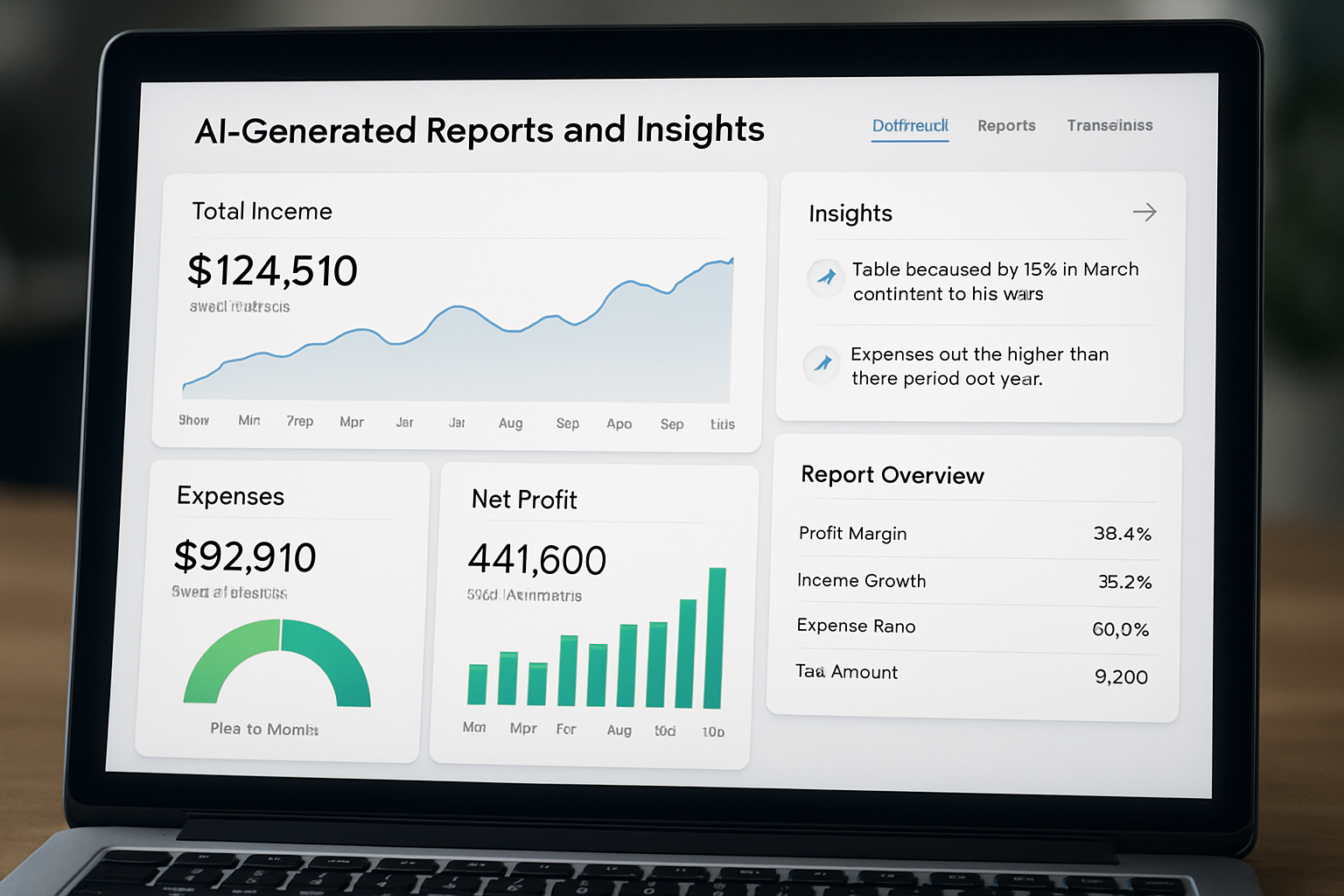
AI-powered analytics process large datasets swiftly to provide up-to-date financial reports, forecasting, and cash flow insights. This real-time visibility empowers businesses to make proactive decisions, optimize budgeting, and identify growth opportunities swiftly.
Cost Savings and Scalability
Outsourcing bookkeeping can be expensive. AI software automates many labor-intensive tasks, helping reduce overhead costs without sacrificing quality. This is particularly critical for startups and small businesses with tight budgets. Additionally, AI scales seamlessly with business growth, handling increasing data volumes without requiring proportional increases in staff.
Improved Compliance and Risk Management
Keeping up with evolving tax laws and accounting standards is challenging. AI tools automate compliance checks and generate audit trails, helping businesses stay aligned with regulatory requirements and reduce fraud risks. Docyt, for example, offers automated expense tracking and document management to ensure tax and regulatory compliance.
Tip: Familiarize yourself with AI tools that integrate directly with your current accounting platforms for a smoother transition and greater ROI.
Top AI Bookkeeping Software Tools in 2025
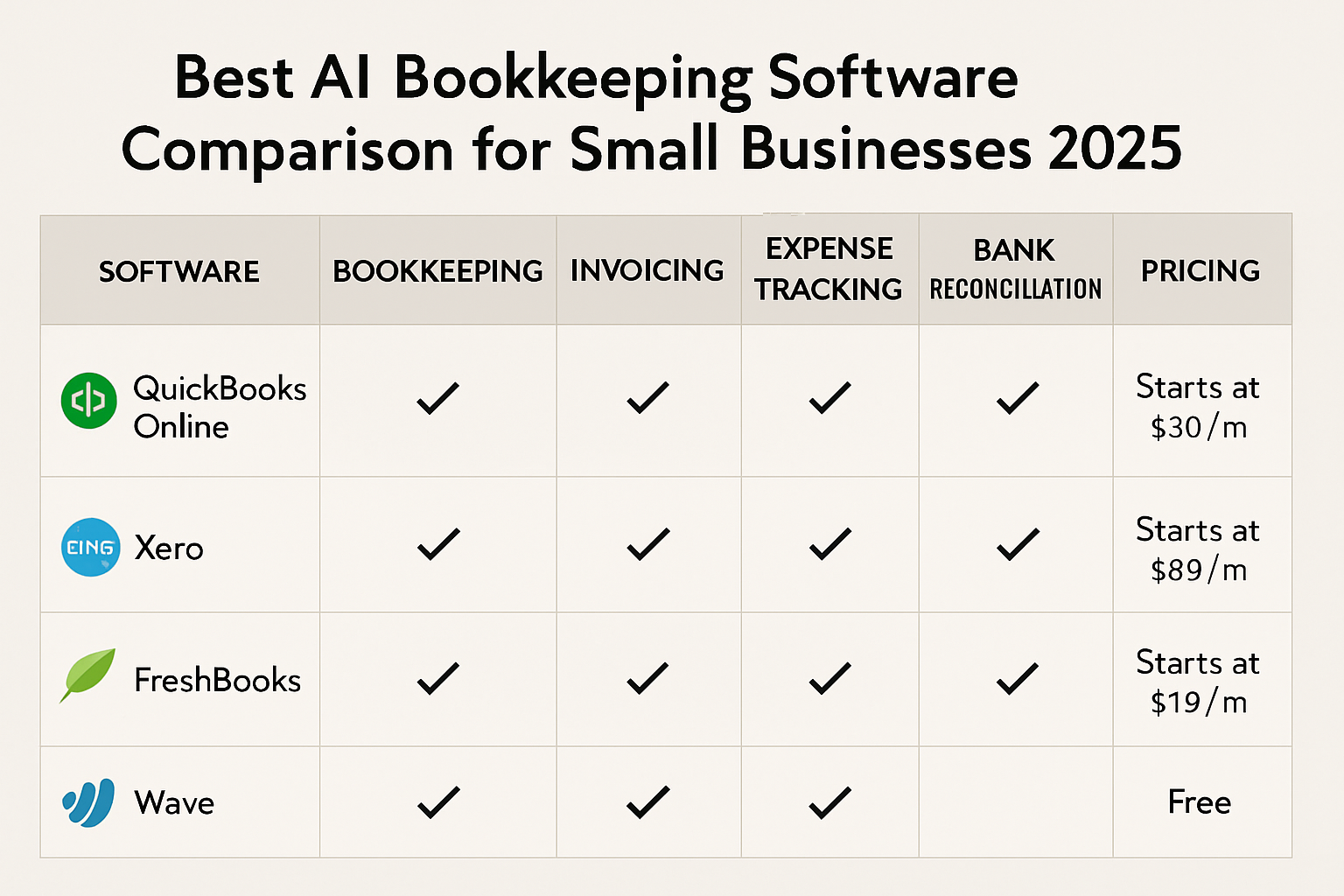
With so many AI bookkeeping software solutions available, selecting the right one can feel overwhelming. Below is a detailed overview of five leading tools that have proven their value for different business needs:
Bookeeping.ai
- Best for: Small businesses and solo entrepreneurs seeking time-saving automation.
- Pricing: Starting at $50 per month with a 3-day free trial.
- Features: Automates 95% of accounting work, saving approximately 57 hours monthly; handles expense tracking, income monitoring, and financial record maintenance efficiently.
- User Interface: Highly user-friendly and easy to adopt.
Zeni
- Best for: Startups needing comprehensive financial automation.
- Pricing: Starts at $549 per month.
- Features: End-to-end bookkeeping automation, including reconciliations, financial reporting, and data-driven decision tools.
- User Interface: Moderate complexity; suited for growth-stage companies.
Vic AI
- Best for: Businesses focused on accounts payable automation.
- Pricing: Customized quotes based on company needs.
- Features: Invoice data extraction, transaction validation, policy compliance, and approval workflow streamlining.
- User Interface: Moderate complexity.
Docyt
- Best for: Companies wanting automated expense and document management.
- Pricing: Starts at $299 monthly for core accounting; $499 for departmental bookkeeping.
- Features: Receipt capture, transaction categorization, financial reporting, and collaboration features powered by generative AI.
- User Interface: User-friendly with customization options.
Truewind
- Best for: Businesses emphasizing budgeting and forecasting.
- Pricing: Contact vendor for pricing.
- Features: Data entry automation, real-time insights, budgeting, and forecasting assistance.
- User Interface: Medium-high complexity.
The key to choosing your software is aligning the tool features, pricing, and complexity with your specific business needs and capacity for adoption. For more tailored advice on automation solutions, consider exploring accounting workflow automation strategies.
How AI is Transforming Accounting Workflows
Artificial intelligence is reshaping the accounting profession—empowering finance teams to do more, with less manual effort, and greater accuracy.
Automation of Routine Tasks
AI eliminates repetitive tasks such as data entry, invoice processing, and reconciliations. For example, AI-powered robotic process automation (RPA) bots can mimic human actions with speed and precision, reducing workloads for accountants. Automating these tasks increases productivity and decreases human error.
Enhanced Data Analysis and Decision Making
Machine learning algorithms analyze vast amounts of data to identify trends, anomalies, and forecasts. Accountants can rely on AI to detect fraud, predict cash flow challenges, and uncover cost-saving opportunities. This shift allows them to take on more strategic roles within organizations.
Improved Communication and Client Collaboration
AI tools help summarize lengthy email threads, draft communication, and generate client updates, improving response times and client satisfaction. Platforms like Karbon AI integrate these features directly into accounting practice management software, consolidating workflows into one place [Karbon AI].
Extensive Integration Capabilities
Modern AI bookkeeping software can seamlessly integrate with ERPs, payment systems, and other business tools, allowing for synchronized data flow and minimizing siloed operations. This connectivity enhances data accuracy and enables holistic financial management.
Are you leveraging AI to automate your most time-consuming accounting activities? If not, you could be missing a huge opportunity to scale and improve your financial accuracy.
Implementation Challenges and Solutions
Despite the clear benefits, integrating AI bookkeeping software comes with challenges. Understanding these helps to prepare your organization and minimize risks:
Data Security and Privacy
Handling sensitive financial information demands robust cybersecurity measures. AI solutions must comply with regulations like GDPR and CCPA, and use encryption, secure access controls, and audit mechanisms. Trustworthy vendors typically provide clear data governance frameworks.
Change Management and Resistance
Staff fears about job displacement or mistrust in AI can slow adoption. Leadership should foster open communication, involve users early in decision-making, and provide AI-focused training. Creating an AI policy that sets clear usage guidelines can ease concerns while encouraging experimentation.
Skills Gap
Not all finance professionals initially possess the skills to fully harness AI tools. Structured training programs and mentorship foster AI literacy and develop strategic usage. Firms investing in AI training report significant time savings and better technology uptake [Karbon HQ].
Integration Difficulties
Legacy accounting systems might lack compatibility with advanced AI applications. Selecting software that offers seamless integration or opting for modular solutions can facilitate smoother data flows, reducing implementation costs and technical hiccups.
Addressing these challenges proactively creates a culture where AI is seen as a vital partner rather than a threat—unlocking its true transformative potential.
Future Trends in AI Bookkeeping Software
The evolution of AI technology continues to unlock new possibilities for bookkeeping and accounting. Here are some key trends to watch in 2025 and beyond:
Advanced Predictive Analytics and Forecasting
AI is shifting from static reporting to dynamic forecasting, using historical and external data to model various financial scenarios. This empowers businesses to anticipate cash flow changes, budget more accurately, and adjust strategies in real time.
Integration of Blockchain Technology
The combination of AI with blockchain promises improved data integrity and transparency. AI algorithms can validate blockchain transactions, facilitate smart contract execution, and enhance audit processes—making compliance and risk management more robust and efficient [Trullion].
Generative AI for Enhanced Collaboration
Generative AI capabilities will expand beyond task automation into creating detailed reports, drafting complex financial documents, and providing tailored advice—making financial management more accessible and less time-consuming.
AI-Powered Client Interaction Tools
Virtual assistants and AI-driven chatbots will revolutionize accounting customer service by instantly responding to queries, guiding clients through processes, and freeing up human resources for higher-value work.
These emerging trends highlight how staying ahead with AI can confer a lasting competitive advantage in a rapidly evolving financial landscape.
Maximizing AI Bookkeeping Software Benefits
To fully capitalize on AI bookkeeping software, businesses should adopt strategic approaches tailored to their unique context and goals:
Conduct a Workflow Analysis
Begin by documenting your current accounting processes. Identify manual, repetitive, and error-prone tasks that AI can automate or augment. Prioritize based on data complexity and task suitability.
Choose the Right Tools
Not all AI bookkeeping software fits every company. Evaluate tools based on your business size, industry needs, user-friendliness, integration capabilities, and cost structures.
Invest in Team Training
Equip your accounting team with AI literacy through workshops, hands-on projects, and expert mentorship. Encourage a culture of experimentation within a safe framework—consider building an AI policy to set clear rules.
Emphasize Continuous Improvement
As AI technologies evolve rapidly, regularly revisit your AI strategies, retrain your team, and refine automated workflows to unlock new efficiencies and insights.
Partner with Experts When Needed
For those seeking expert AI integration and financial management support, collaborating with outsourced bookkeeping and AI service providers can accelerate transformation while reducing adoption friction.
For a deeper dive into pricing, budgeting, and examples that can further help optimize your bookkeeping strategy, check out our detailed Bookkeeping Pricing Calculator Guide.
What's Your Next Step?
Tell us in the comments: How will you apply this to your financial management strategies? Looking for personalized advice or guidance on choosing the best AI bookkeeping software? Contact us! Let’s take your bookkeeping to the next level in 2025.
References:
For related insights on enhancing your accounting workflows through advanced automation techniques, visit this comprehensive guide. To deepen your understanding of outsourced bookkeeping costs and ROI, explore our expert breakdown here.
Also, enhance your technology stack awareness by checking out Mastering Smarts and Crafts, a fascinating read on the blend of traditional processes with technology innovations.