
Mastering Bookkeeping Automation: The Ultimate 2025 Guide for Effortless Finance Management
Bookkeeping automation has revolutionized how businesses handle their financial data.
But what exactly is bookkeeping automation, and why does it matter more than ever?
Here’s your ultimate 2025 cheatsheet covering everything you need to make bookkeeping automation work for you.
Some are simple task automators, eliminating tedious data entry.
Some are comprehensive platforms integrating payroll, invoicing, and compliance.
Some evolve workflows to empower accountants for strategic decision-making.
Some improve accuracy and compliance while securing sensitive data.
Some offer cloud-based flexibility, accessible anywhere.
Let’s dive right in.
Table of Contents
- What is Bookkeeping Automation?
- Top Benefits of Bookkeeping Automation
- How to Implement Bookkeeping Automation Successfully
- Overcoming Common Challenges in Bookkeeping Automation
- Best Tools and Software for Bookkeeping Automation
- Future Trends in Bookkeeping Automation
- Security, Compliance, and Accuracy Advantages
- Case Study & Real-World Examples
- Recommended Resources and Links
- What’s Your Next Step?
What is Bookkeeping Automation?
Bookkeeping automation involves using advanced software and robotic process automation (RPA) to handle repetitive, rule-based accounting tasks that were historically manual and time-consuming.
Think about routine data entry, bank reconciliations, invoice generation, and payment tracking. These can now be executed automatically with minimal human intervention.
The evolution began long ago—from mechanical adding machines to spreadsheets—until modern cloud-based, interactive platforms like Accounting Seed fundamentally changed the game by fully automating accounting workflows.
Robotic process automation software connects disparate tasks such as sales tracking, invoicing, accounts receivable, and cash management seamlessly without constant manual input.
The goal? To free up finance professionals so they can focus on strategic responsibilities such as financial planning and business analysis instead of drudgery.
Did you know? Studies show that automation can reduce up to 80% of standard accounting department tasks, saving countless hours and significantly reducing human error [Source].
Top Benefits of Bookkeeping Automation
Bookkeeping automation brings a host of benefits that ripple across the entire business. Let’s explore them in-depth.
1. Time Savings and Increased Productivity
Automating repetitive tasks like data entry, bank statement reconciliation, invoice processing, and report generation reduces manual workloads.
This shift lets internal accountants focus on value-driven tasks instead of busy work.
For example, automated systems can run bank feeds and categorize transactions in real-time, trimming hours of manual sorting. The impact? Studies recount faster month-end closes and improved external accountant efficiency [Source].
2. Enhanced Accuracy and Reduced Human Error
Bookkeeping automation software eliminates the need for manual data entry, which is prone to costly mistakes and discrepancies.
Automated rules ensure transactions reliably categorize correctly, and error-checking features catch inconsistencies early.
This leads to more accurate financial records that facilitate smoother audits and regulatory compliance.
Remember: better data accuracy is foundational before leveraging AI for financial analysis or forecasting [Source].
3. Real-Time Financial Insights and Dashboards
Traditional bookkeeping relies heavily on end-of-period reporting, delaying business insights.
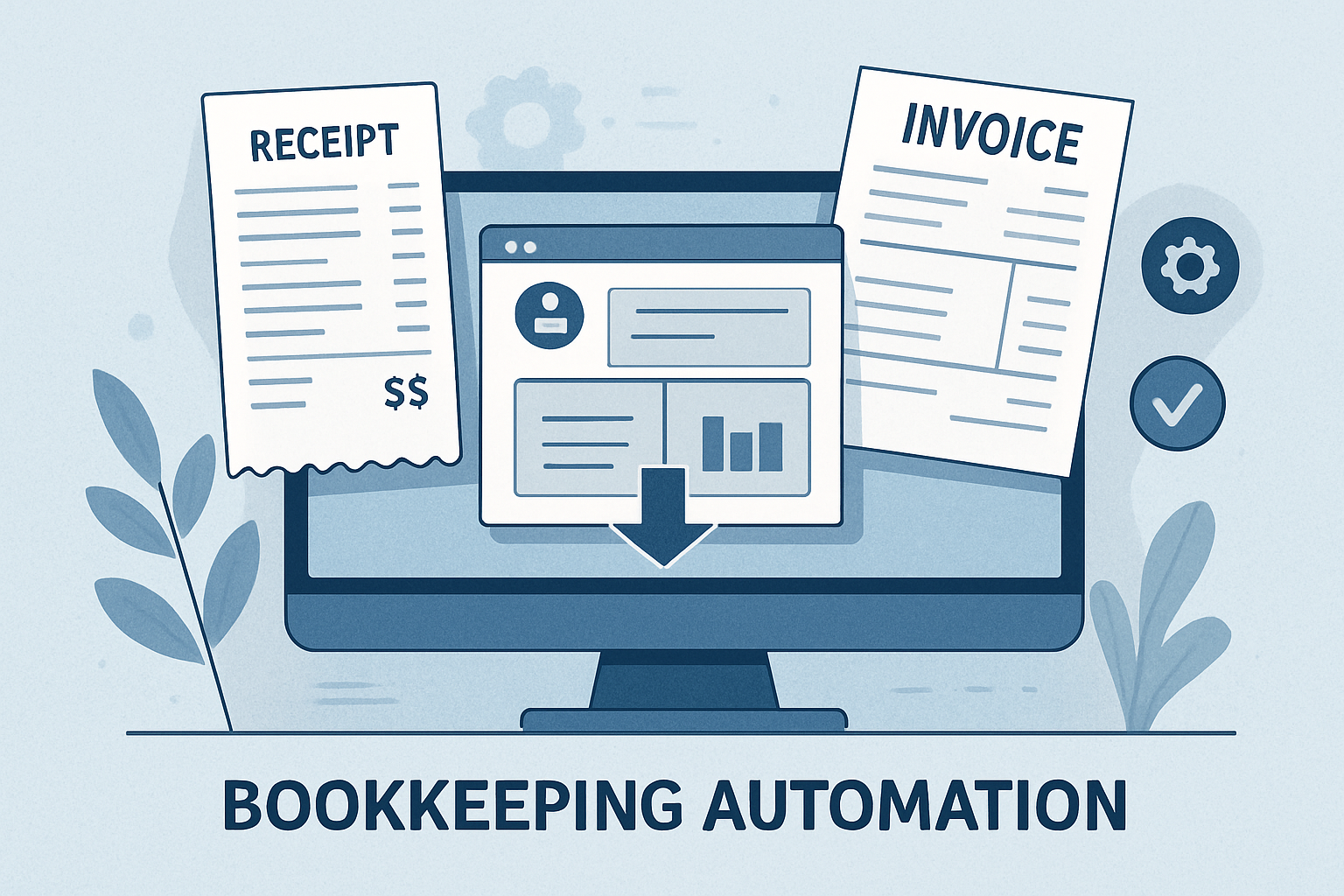
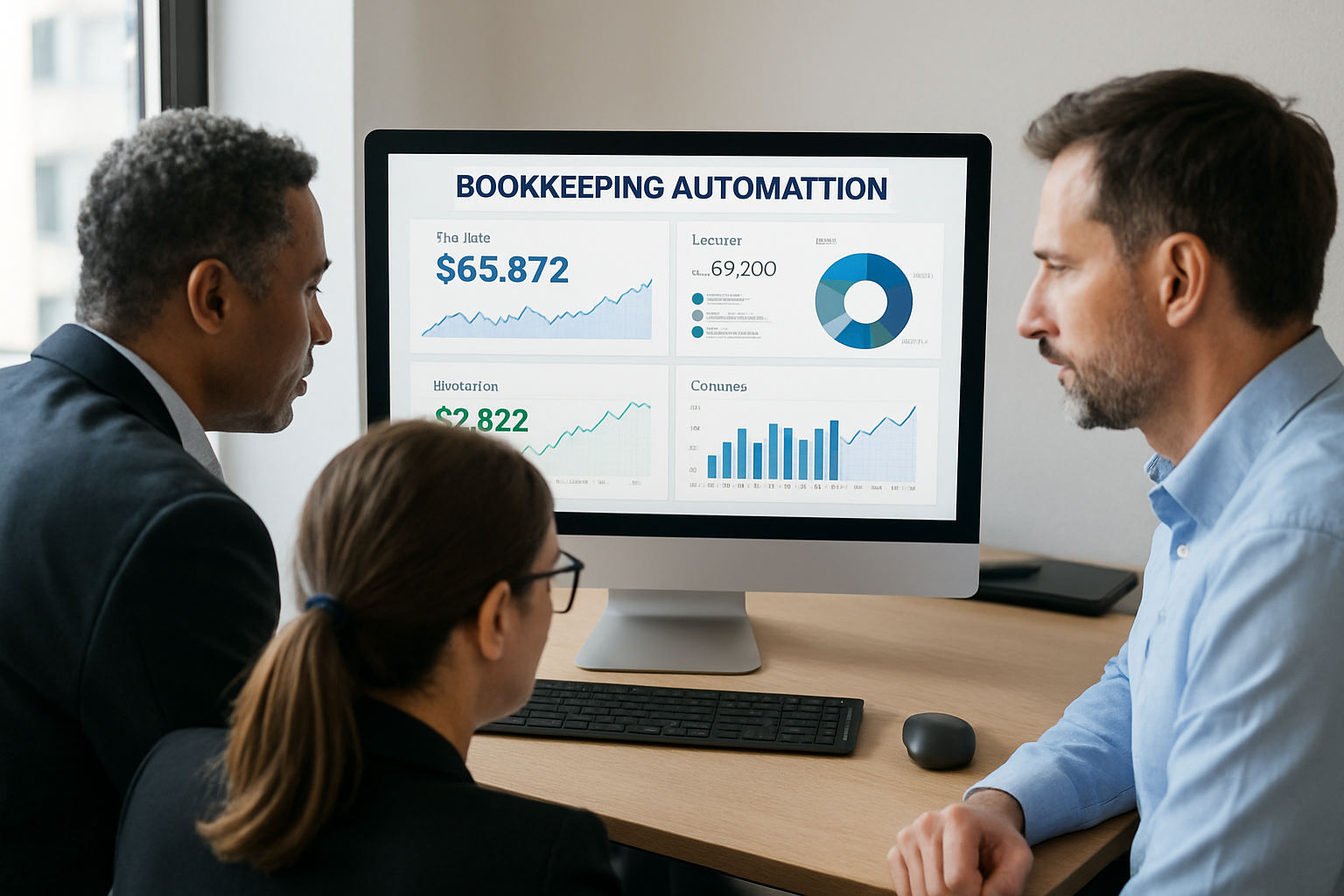
Automation allows transactions to update continuously, populating easy-to-read dashboards featuring profits, cash flow, and operating costs in real-time.
This immediate visibility enables quicker, smarter decision-making and early spotting of financial risks.
Imagine seeing cash-flow concerns mid-month rather than waiting for quarter-end statements.
4. Improved Compliance and Security
Automated bookkeeping software integrates role-based permissions, audit trails, and encrypted cloud storage to secure sensitive financial data.
It also helps maintain compliance with tax laws, regulations, and audit readiness by generating accurate, organized financial records automatically.
Automatic inclusion of applicable sales tax rates and precise payroll tax calculations reduce compliance burdens during tax season [Source].
5. Scalability and Flexibility
The right automation tools adapt as your business grows, handling new income streams, multiple entities, foreign currency exchange, and evolving financial workflows.
Modern accounting platforms with integration capabilities allow seamless data sharing across sales, inventory, payroll, and tax apps.
This eliminates data silos and maintains consistency at scale.
Quick question: Are you ready to ditch manual ledger updates and embrace automation that grows with your business?
How to Implement Bookkeeping Automation Successfully
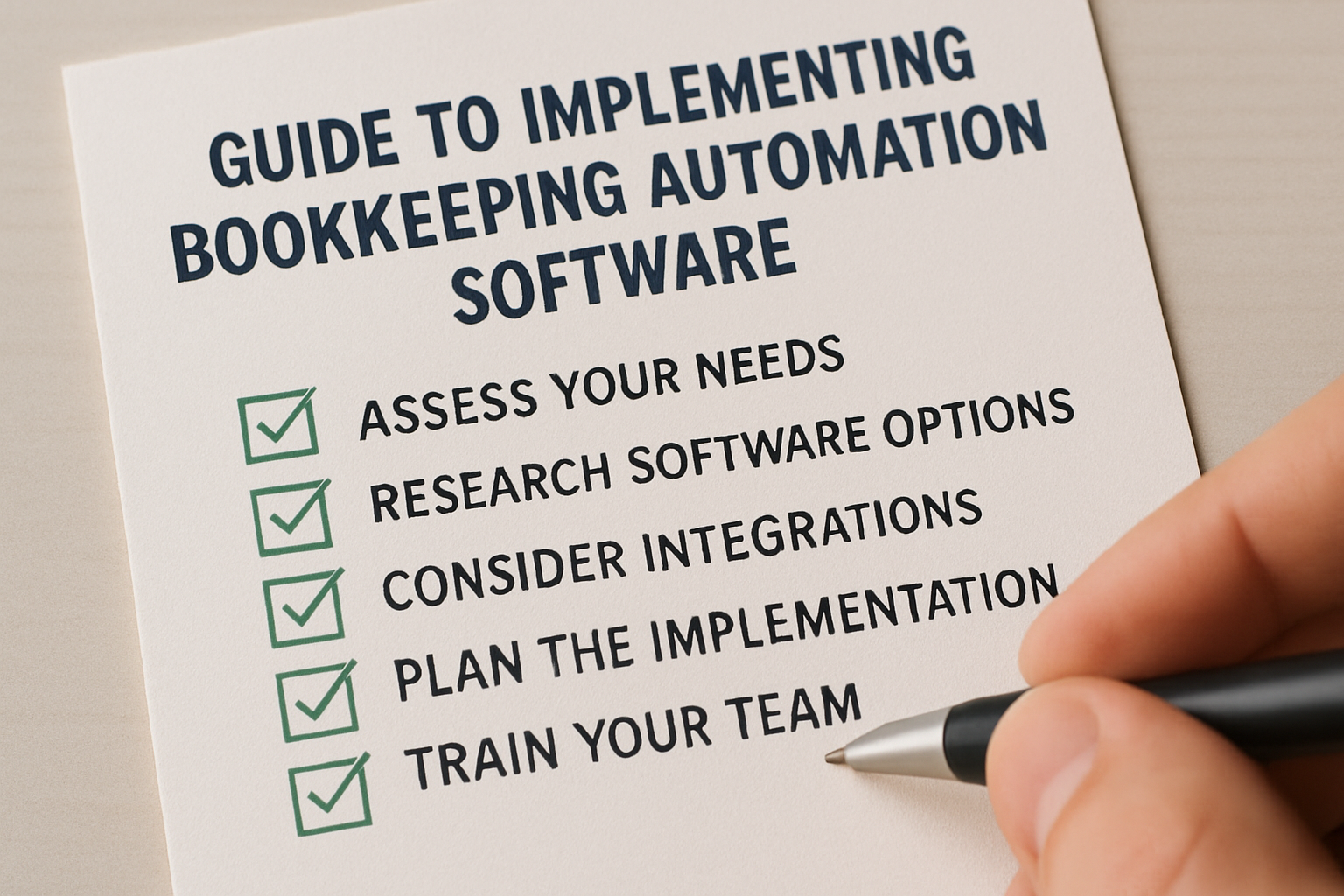
Transitioning to bookkeeping automation requires thoughtful planning and execution to maximize benefits.
1. Define Your Current Processes and Pain Points
Start by mapping your existing bookkeeping workflows, identifying repetitive tasks causing bottlenecks, errors, or time drains.
Examples of common pain points ripe for automation include manual invoice generation, bank reconciliations, recurring billing, and payroll processing.
2. Choose the Right Software Platform
Select a flexible accounting automation tool tailored to your company size, complexity, and IT environment.
Look for cloud-based solutions with robust integration capabilities and intuitive user interfaces—like Accounting Seed or QuickBooks automation modules. Consider platforms that enable seamless integration with systems such as Salesforce to avoid multiple manual data entries [Source].
3. Create Clear Automation Workflows
Design workflows defining when and how automation triggers action—for instance, setting up recurring invoices, automated bank feeds, or payroll pay runs.
This minimizes manual touchpoints and enforces consistency.
4. Staff Training and Change Management
Train your accounting team thoroughly on the new system, emphasizing how automation elevates their work to focus on financial analysis and advisory roles.
Address anxieties about job loss and present automation as a job enhancer that frees staff from boring, tedious tasks.
5. Monitor and Optimize Continuously
Regularly review automation outputs for accuracy and relevance.
Update rules and workflows as your business models or accounting needs evolve.
Overcoming Common Challenges in Bookkeeping Automation
Despite clear benefits, companies often face hurdles implementing bookkeeping automation. Here’s how to tackle them.
1. Data Management Complexity
High volumes of financial data from multiple sources pose a challenge.
SOLUTION: Align data standards across departments and adopt versatile systems accommodating evolving data structures, e.g., ERP platforms like NetSuite.
2. Integration with Legacy Systems
Companies sometimes rely on outdated processes such as manual payroll or paper checks.
SOLUTION: Gradually computerize these processes before full automation or leverage tools that integrate disparate systems smoothly.
3. Staff Resistance and Skill Gaps
Fear of job displacement or lacking tech skills can slow adoption.
SOLUTION: Promote automation as an enabler for higher-level work. Invest in continuous training and career development tied to emerging financial technologies.
4. Maintaining Automation Accuracy Over Time
Changes in vendors, clients, or account structures can cause automation rules to break down.
SOLUTION: Set periodic reviews of your automation rules and workflows. Schedule monthly or quarterly audits to ensure ongoing data integrity [Source].
5. Privacy and Security Concerns
Automating financial data raises questions about confidentiality and fraud risks.
SOLUTION: Use software with robust role-based permissions, audit logs, and encryption protocols to control access and ensure secure data handling [Source].
Pro tip: Successful implementation starts with acknowledging these challenges and planning systematically to overcome them.
Best Tools and Software for Bookkeeping Automation
Choosing the right tool can make or break your automation journey. Here are some top contenders and their strengths:
1. Accounting Seed
A powerful cloud-based platform built on Salesforce, Accounting Seed offers comprehensive automation—from invoicing to bank reconciliation and financial dashboards. It scales well for growing businesses and integrates with CRM for data consistency [Source].
2. QuickBooks Automation Features
Ideal for small to mid-sized companies, QuickBooks automates recurring transactions, payroll, bill payments, and financial reporting. Its bank feeds and categorization rules speed reconciliation considerably. Plus, QuickBooks integrates with numerous e-commerce and CRM apps to form a financial ecosystem [Source].
3. Enterprise Resource Planning (ERP) Systems
For larger organizations needing unified financial management across departments, ERP systems like NetSuite offer end-to-end automation, consolidating multi-entity data, enforcing standards, and enabling advanced analytics.
Explore more software strategy insights here.
Future Trends in Bookkeeping Automation
Bookkeeping automation is evolving rapidly, driven by innovative technologies and changing business needs. Here’s what to watch for:
1. Artificial Intelligence and Machine Learning Integration
AI is enhancing automation from simple rule-based tasks to predictive analytics and anomaly detection. This enables proactive financial insights and smarter decision-making.
2. Increased Use of Robotic Process Automation (RPA)
RPA bots now handle complex multi-step processes, reducing manual oversight and enabling near 24/7 operations in accounting functions [Source].
3. Expansion of Cloud-Native Financial Ecosystems
Cloud-based solutions will continue dominating, facilitating better data accessibility, collaboration, and integration across business functions globally.
4. Blockchain for Secure and Transparent Transactions
Distributed ledger technology promises enhanced security and auditability in bookkeeping, reducing fraud risk and improving trust.
5. Automation of Tax Compliance and Reporting
Regulatory compliance will become more automated, with software automatically adapting to new tax laws and filing requirements.
Imagine your finance team spending less time crunching numbers and more time strategizing growth!
Security, Compliance, and Accuracy Advantages
One of the greatest assets of bookkeeping automation is the substantial improvement in security and regulatory adherence.
Automated systems with role-based permissions ensure only authorized personnel access sensitive financial data.
Audit trails record every change, making fraud harder and providing clear evidence during audits.
Cloud storage with encryption further protects data from breaches and physical loss.
Automation also facilitates real-time tracking and audit-ready reports, ensuring your business remains compliant with evolving financial regulations across multiple jurisdictions.
Automated Sales Tax and Payroll Compliance
Automation software calculates state-specific sales taxes automatically and integrates with payroll systems to ensure timely, accurate tax filings and payments.
This greatly reduces the risk of penalties for errors or late submissions.
(Verified with sources as of 2025-08-14)
Case Study & Real-World Examples
Consider a mid-sized manufacturing company that transitioned its entire bookkeeping process to an automated platform like Accounting Seed.
Before automation, their finance team struggled with manual invoice generation, delayed reconciliations, and error fixing, resulting in a lengthy month-end close process.
After implementation, recurring billing and journal entries ran automatically, bank transactions synced reliably, and real-time dashboards provided immediate insights into cash flow and expenses.
The company reported a 60% reduction in bookkeeping man-hours and improved relationships with vendors due to timely payments.
Employees felt more engaged tackling financial strategy rather than manual data drudgery, showcasing how automation empowered their skills [Source].
Another example is integrating QuickBooks automation for a small business, which enabled seamless bank feeds, scheduled invoice reminders, and automated report emailing. This improved cash flow management and reduced late payments [Source].
These cases highlight that choosing well-suited automation tools and following best practices leads to both operational efficiencies and more strategic finance teams.
Recommended Resources and Links
- How to Automate Bookkeeping with QuickBooks AI: The Ultimate 2025 Guide - Detailed guide on leveraging QuickBooks for automation.
- The Ultimate 2025 Guide to Accounting Workflow Automation - Explore strategies and tools for comprehensive automation.
- 10 Powerful Accounting Automation Examples - Real-life automation use cases to inspire.
Looking for expert support to set up or optimize your bookkeeping automation? Explore bookkeeping service ideas and solutions tailored for businesses in 2025.
What’s Your Next Step?
Tell us in the comments: How will you apply bookkeeping automation to transform your finance workflows?
For personalized advice and to explore automation tailored to your unique business needs, contact us today!