
The Ultimate 2025 Guide to AI Bookkeeping Software: Transform Your Financial Workflow
AI bookkeeping software has become a game-changer in the accounting world.
But what exactly is AI bookkeeping software, and how can it benefit your business?
Here’s your ultimate cheat sheet to mastering AI bookkeeping software in 2025.
Some are designed to automate up to 95% of routine bookkeeping tasks.
Some are equipped with advanced machine learning algorithms that drastically reduce manual errors.
Some provide real-time financial insights to inform strategic decisions.
Some seamlessly integrate with your existing accounting systems for a smooth transition.
Some offer scalable solutions for businesses of all sizes, from solopreneurs to enterprises.
Let’s dive right in.
Understanding AI Bookkeeping Software
AI bookkeeping software leverages artificial intelligence technologies such as machine learning, natural language processing, and automation to streamline accounting processes. Instead of tediously entering data or manually verifying transactions, these smart tools handle data extraction, reconciliation, anomaly detection, and even predictive analytics.
As a result, businesses save valuable time, minimize costly errors, and gain instant visibility into their financial health. This shift allows accountants and finance teams to focus on strategic insights instead of repetitive tasks.
For instance, platforms like Trullion excel in automating data extraction from varied accounting documents, while HubiFi demonstrates how to effectively integrate AI accounting software with existing systems to maximize workflow efficiency.

Key Benefits of AI Bookkeeping Software
- Time-Saving Through Automation: AI software automates data entry, invoice processing, and report generation, freeing up to 60 hours per month for many users. This drastic time saving empowers finance teams to prioritize strategic planning over manual tasks.
- Improved Accuracy and Error Reduction: Manual bookkeeping often leads to data entry errors that snowball into significant financial discrepancies. AI's precision substantially lowers these risks, producing more reliable financial statements that boost confidence in decision-making.
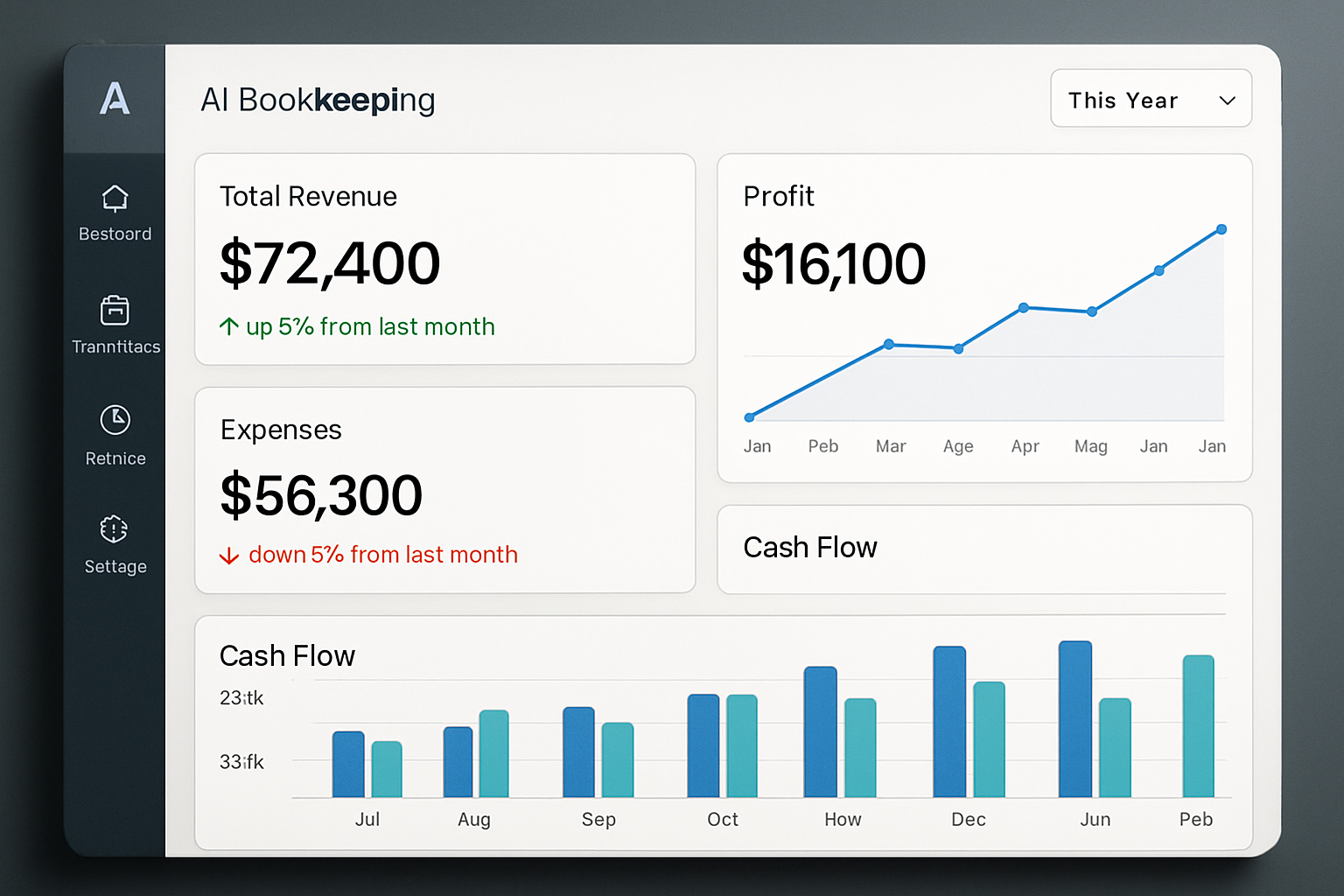
- Real-Time Financial Insights: Unlike traditional bookkeeping, AI-driven platforms offer up-to-the-minute analytics on key financial metrics such as cash flow, revenues, and expenses. This instant access helps businesses anticipate issues and capitalize on opportunities swiftly.
- Cost Efficiency and Scalability: While initial AI software investment may seem high, the long-term savings from reduced labor hours and improved accuracy lead to a quick return on investment. Moreover, AI tools scale gracefully to handle increasing transaction volumes as businesses grow.
- Enhanced Compliance and Reporting: AI bookkeeping solutions often automate complex regulatory reporting, VAT calculations, and tax compliance processes, reducing audit risks and ensuring accuracy even under evolving financial regulation.
It’s clear — the era of AI bookkeeping software is here to transform financial management from tedious to strategic.
Popular AI Bookkeeping Software for 2025
Choosing the right AI bookkeeping software depends on your company's size, complexity, and specific pain points. Here’s a deeper dive into some top options:
1. Bookkeeping.ai
Automating as much as 95% of accounting tasks, Bookkeeping.ai offers receipt scanning, AI-powered chat support for financial queries, and automatic tax form filling. Ideal for businesses seeking comprehensive automation that drastically cuts down manual efforts.
2. Trullion
Trullion specializes in advanced data extraction, validation, and financial statement review automation. Its platform empowers accounting teams to shift focus from data entry to higher-value financial analysis. Its capabilities are detailed in their comprehensive guide.
3. Vic.ai
Vic.ai shines in automating accounts payable with claims of 355% invoice processing improvement. Real-time insights and cost control features make it suitable for businesses with complex expense management needs.
4. Envoice
Tailored for small businesses, Envoice automates pre-accounting tasks such as expense approvals and invoice processing. At $14 per company per month, it offers a budget-friendly yet effective solution reportedly leading to faster document handling up to twice the speed.
5. QuickBooks Online (QBO) with AI Integration
QuickBooks is integrating AI features like Intuit Assist, an AI-enabled virtual assistant offering personalized insights and compliance help. Many small businesses benefit from its ease of use and widespread acceptance—making it a reliable AI-powered core accounting system.
How to Choose the Right AI Bookkeeping Software
Picking the best AI bookkeeping software is about matching features to your business needs. Consider these critical factors:
- Automation Depth: Do you want pure data entry automation or comprehensive financial management with predictive insight?
- Integration Capability: Can the software smoothly integrate with your existing accounting and ERP systems? Compatibility minimizes disruption.
- Scalability: Choose software that grows with your business transaction volume and complexity.
- Ease of Use: Evaluate user interfaces and training requirements to ensure rapid adoption by your team.
- Support and Security: Confirm robust vendor support and strict adherence to data security standards, especially since financial data is sensitive.
- Cost: Align pricing models with your budget, considering long-term ROI rather than just upfront expenses.
Taking the time to assess your current financial systems and future goals will guide you in selecting the most effective AI bookkeeping partner. For additional tips on automation strategy, check out The Ultimate 2025 Guide to Accounting Workflow Automation to ensure maximum ROI.
Integrating AI Bookkeeping Software into Your Business
Successful AI adoption isn’t just about picking the right tool but also executing a smooth integration. Follow these best practices for a seamless transition:
1. Evaluate Current Systems
Understand what’s working and what’s not in your current financial workflows. Identify bottlenecks where AI can provide the greatest value.
2. Engage Key Stakeholders Early
Involve finance, IT, and leadership teams to align on objectives, ease resistance, and incorporate essential input.
3. Start with a Pilot
Deploy AI software in a controlled environment first. This pilot testing helps discover challenges and adjustment needs without disrupting core operations.
4. Ensure High-Quality Data
AI depends on clean, accurate data. Dust off your records before integration to avoid garbage-in, garbage-out risks.
5. Provide Comprehensive Training
Equip your users with hands-on sessions, manuals, and ongoing support to ease the learning curve and maximize the software’s benefits.
6. Monitor and Optimize
Track KPIs like time saved, error reduction, and reporting speed. Continuous improvement ensures your AI system evolves with business needs.
Wondering how to navigate common integration challenges? Many businesses face employee resistance, security concerns, and technical hiccups. Address these by clear communication about AI’s role as an assistive tool, robust vendor security standards, and involving IT experts early for smooth technical integration.
Real-World Success Stories of AI Bookkeeping
The power of AI bookkeeping software is best illustrated through success stories from businesses that have implemented these tools.
e-Residency Hub
This global business services provider automated data entry and expense management using Envoice, enabling them to handle 800+ clients in 68 countries with less manual workload. They achieved 40% annual growth while doubling document processing speed, exhibiting how small firms can scale efficiently with AI.
Stillabunt
An Estonian environmental initiative, Stillabunt streamlined invoice processing and bookkeeping with AI software. This freed up staff to focus on reforestation projects while maintaining efficient financial operations.
Cookie Doughboy
Starting as a word-of-mouth small business during the pandemic, Cookie Doughboy adopted QuickBooks Online integrated with AI tools. They could efficiently track orders, expenses, and financial records to support rapid growth and establish wholesale partnerships.
These examples prove that AI bookkeeping software is not just a futuristic concept but a practical tool for real business challenges. The competitive edge it provides is undeniable, whether for small businesses or enterprises.

Common Questions About AI Bookkeeping Software
Can AI bookkeeping software replace human accountants?
No. AI automates repetitive tasks and enhances accuracy, but it cannot replace strategic thinking, complex decision-making, or client relationships that human accountants provide. AI serves as a powerful assistant to finance teams.
Is AI bookkeeping software secure for sensitive financial data?
Reputable AI tools adhere to strict data security standards, including encryption and access controls. Always verify a vendor’s security credentials before adoption.
How soon can I expect ROI from AI bookkeeping software?
Many companies report payback periods as short as seven months from labor savings and error reductions. The exact timeline depends on your business size and adoption strategy.
What size of business benefits most from AI bookkeeping?
Businesses of all sizes benefit differently—solopreneurs gain from simplified invoicing with tools like Indy, while enterprises leverage solutions like Vic.ai for complex invoice automation. Small and medium businesses often opt for platforms like Envoice or QuickBooks AI.
Future Trends in AI Bookkeeping Software
As we look ahead, AI bookkeeping software is expected to evolve in these exciting ways:
- Deeper Integration with ERP and CRM Systems: Unified platforms will deliver holistic financial and customer insights.
- Advanced Predictive Analytics: AI will provide forward-looking financial forecasting and risk assessments with greater accuracy.
- Natural Language Interfaces: More intuitive voice and chat-based commands for seamless financial queries and commands.
- Greater Automation of Regulatory Compliance: Machines will adapt automatically to tax law changes ensuring real-time compliance.
Businesses that embrace these evolving capabilities early will enjoy unparalleled agility and profitability in financial management.
Navigating the AI Bookkeeping Software Landscape
With a vast variety of AI bookkeeping software options, it’s crucial to stay informed and deliberate in your choice. To keep advancing your knowledge and stay ahead, consider these resources:
- Explore in-depth guides, such as The Comprehensive Guide to AI Bookkeeping Software: 2025 Cheatsheet.
- Check out step-by-step tutorials on automation and integration, like How to Automate Bookkeeping with QuickBooks AI.
- Stay updated on industry trends and accounting technology improvements in related blogs focused on accounting workflow automation.
For businesses aiming to revolutionize their finance functions with AI, continuous learning and adaptation are essential.
Are you ready to take your bookkeeping into the future?
What's Your Next Step?
Tell us in the comments: How will you apply this to your AI bookkeeping software journey? For personalized advice, contact us!
Looking to further boost your finance team’s efficiency? Check out 50+ Creative Workshop Ideas to Inspire and Engage Your Team for innovative ways to energize your staff.